 中文
中文 THI
THI EN
EN

What are the unreasonable transportation practices of Thai freight companies
In Thailand, some unreasonable transportation is harmful to us without any benefits, and often causes many unnecessary troubles, which violates the objective economic effects and reasonable flow of goods. The carrying capacity of transportation vehicles is not fully utilized, and excessive transportation is an important reason for tight transportation capacity, poor circulation, and increased cargo volume and unreasonable transportation. So, which is unreasonable traffic? Next, we will introduce to you:

1. Convective transport: refers to the transportation of the same or two mutually usable substances in opposite directions on the same or parallel transport line, as well as routes that are completely or partially opposite in direction. Convective transport can be divided into two situations: one is obvious convective transport, that is, reverse flow on the same transport line. For example, on one hand, goods from location A are transported to location B, and on the other hand, the same materials from location B are transported to location A, which is mainly caused by different enterprises in the shipper's region. The second type is hidden convective transport, where the same substance is transported in opposite directions through different modes of transport on two parallel routes.
2. Backflow transportation: refers to the phenomenon of material being transported from the place of origin to the place of sale, and then returned to the place of origin from the place of sale. There are two forms of reverse flow transportation: one is to transport the same material from the place of sale back to the place of origin or transit; Another method is to transport the same material that can be produced and consumed in location A from location B to location A, and the same material that is transported from location A to location C.
3. Detour transportation: refers to the phenomenon of material transportation bypassing from near to far. In the logistics process, different plans, poor organization, or transfer errors can easily lead to circuitous phenomena.
4. Repeated transportation: refers to materials that can be directly transported from the origin to the destination, but can be directly transported due to improper installation by wholesale institutions or commercial warehouses. Alternatively, after the planned manual shipment to intermediate locations (such as transit warehouses), the unreasonable phenomenon of a second shipment or repeated transportation increases the intermediate loading and unloading links, increases loading and unloading costs, and prolongs the transit time of goods.
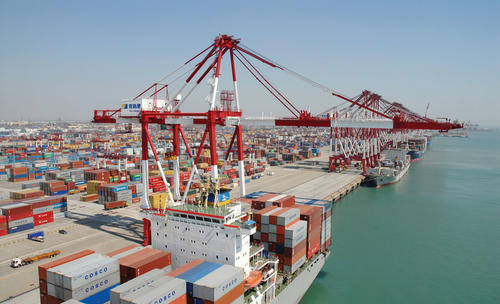
5. Over distance transportation: refers to the phenomenon of getting closer and closer. Land in the market can be supplied from closer origins, but can be purchased from afar; Industrial products are not supplied and consumed nearby, but are transferred to other consumption locations further away, which violates the principle of near production and near sales. This is a long-distance transportation because there is a long distance between the origin and sales location of some materials, so this long-distance transportation is reasonable.
6. Improper selection of transportation capacity: When choosing transportation methods, their advantages were not fully utilized, such as abandoning water and land (increasing costs), railway and large ships being too close for transportation, and improper transportation capacity.
7. Improper selection of shipping method: If you can choose whole vehicle transportation instead of zero cargo transportation, you should choose transit transportation directly, and if you should choose transit transportation instead of direct transportation, there is no optimal shipping method to choose from.